Showing posts with label Acceptance. Show all posts

Thursday, 31 August 2017

Why I walk Parallel London for for anxiety and dyspraxia

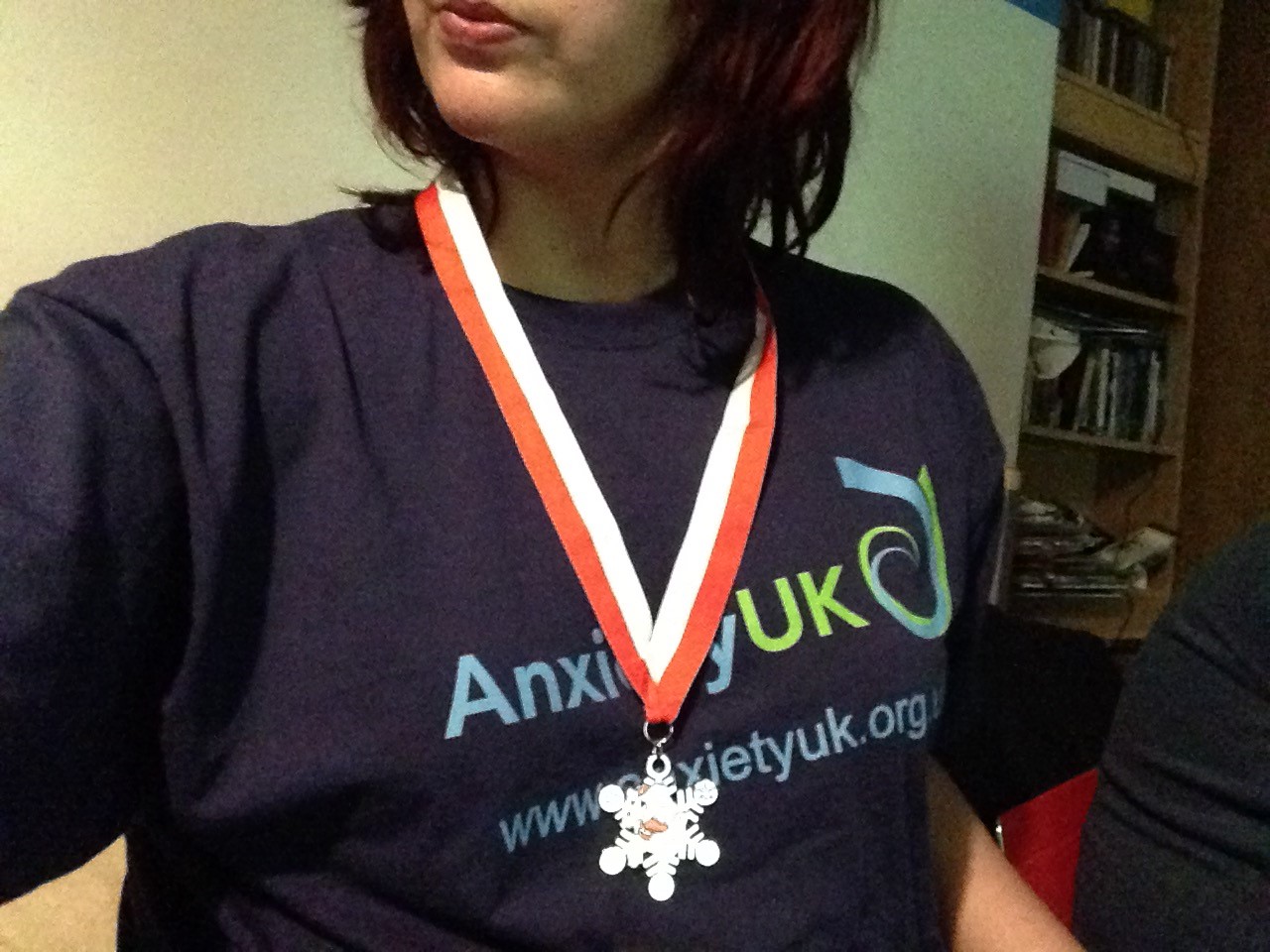
On the 3rd of September, my mum and I will be walking Parallel London 10k. Returning from injury my boyfriend Matt is planning to hobble somehow around the 10k course too. Earlier this year he blogged about why he has been running for Anxiety UK and Dyspraxia Foundation. I thought I would share some of my experiences both growing up and as an adult.

We begin our story when we meet a little girl who never knew why she worried so much, got so overwhelmed and anxious, could never put her hand up in class, and why she was the only person in her reception class photo with an arm in a sling and was different. I had no idea I had an anxietyuntil I reached adulthood and dyspraxia was very much unheard of.

Whenever the subject P.E was brought up at school it made me feel full of dread, It made me feel embarrassed and very self -conscious too. I'm dyspraxic which means it takes me longer to process information and day to day tasks many people take for granted take that bit longer. The messages and wiring from the brain to the body get jumbled up. Everyone who is dyspraxic is very much different you'll never meet two of the same and it's still a very misunderstood condition, I'm a unique, quirky soul. I  have always found making friends difficult alongside my social anxiety, but I am also creative, with a really vivid imagination, huge love of animals and hard working.

Again everyone who has social anxiety/anxiety is different.  For me I mainly find feeling calm, social situations, being in groups of people, trying new things, going to new places, meeting new people and initiating conversations and new and the unknown, difficult. I also have quite a big fear of judgment and saying the wrong thing or appearing boring and can take me a while to come out of my shell.  I'm  an over-thinker and worrier.

At school, I was always the one who was chosen last to be a part of the team, the person nobody wanted to be partnered with and the one who was always last and experienced bullying which had quite a big impact on my social anxiety and confidence/self-esteem.

A few years ago my mental health hit rock bottom due to workplace bullying and I struggled with depression. I decided after this I didn't w
ant others to go through or feel what I felt alone, through these blogs and the awareness work I do hopefully educate others about issues invisible to the eye. I struggled in silence and it took me to be an adult to finally know I had anxiety/social anxiety and issues with low mood.  I would hate for other people to wait for so long like I did and struggle so long by themselves. Anxiety especially social anxiety  is still quite a challenge for me, but I hope with therapy in time to manage it. It's made me have empathy and understanding towards others.

The concept of me going around a 10k course even walking is quite a daunting one for someone with anxiety and dyspraxia and I am starting to feel the anxiety build up towards it with the unknown. Parallel London is a fully inclusive event meaning anyone with any kind of physical difficulty or disability and/or mental health condition can take part free of judgment, that also has designated areas that if people feel anxious or overwhelmed they can go to.

Last year I completed the 5k event with Matt and it really did open my eyes seeing people with severe and complex needs being able to take part in their own way. More events need to be more inclusive. Confidence and self-esteem alongside my anxiety is quite a big challenge for me  and make me struggle with low mood as I doubt and am far too hard on myself  so by completing this event it will give me a boost. Those around me say that I never give up, a persevere and
and so hopefully the event will help me believe in myself a little bit more.

Anxiety UK does amazing work alongside other mental health charities to reduce the stigma surrounding these and have always been caring. The Dyspraxia Foundation helped my family a lot when I was growing up and have helped me a lot as an adult by putting on conferences, so my mum will be giving back by taking herself.  The ladies from the office and other supporters are also taking part in Parallel, as for them this isn't something which is their usual forte.

We all are very much doing it mainly for awareness but if you have any spare money around to sponsor us, it will be gratefully appreciated. As individuals we do ok, but together we really can make a difference!
https://www.justgiving.com/teams/MattRosie17

Until next time ......


Monday, 28 August 2017

Why I walk Parallel London for for anxiety and dyspraxia

 On the 3rd of September, my mum and I will be walking Parallel London 10k. Returning from injury my boyfriend Matt is planning to hobble somehow around the 10k course too. Earlier this year he blogged about why he has been running for Anxiety UK and Dyspraxia Foundation. I thought I would share some of my experiences both growing up and as an adult.

We begin our story when we meet a little girl who never knew why she worried so much, got so overwhelmed and anxious, could never put her hand up in class, and why she was the only person in her reception class photo with an arm in a sling and was different. I had no idea I had an anxiety disorder until I reached adulthood and dyspraxia was very much unheard of.

Whenever the subject P.E was brought up at school it made me feel full of dread, It made me feel embarrassed and very self -conscious too. I'm dyspraxic which means it takes me longer to process information and day to day tasks many people take for granted take that bit longer. The messages and wiring from the brain to the body get jumbled up. Everyone who is dyspraxic is very much different you'll never meet two of the same and it's still a very misunderstood condition, I'm a unique, quirky soul. I  have always found making friends difficult alongside my social anxiety, but I am also creative, with a really vivid imagination, huge love of animals and care about humans.

Again everyone who has social anxiety/anxiety is different.  For me I mainly find feeling calm, social situations, being in groups of people, trying new things, going to new places, meeting new people and initiating conversations and new and the unknown, difficult. I also have quite a big fear of judgment and saying the wrong thing or appearing boring and can take me a while to come out of my shell.  I'm  an over-thinker and worrier and quite a sensitive emotional soul.

At school, I was always the one who was chosen last to be a part of the team, the person nobody wanted to be partnered with and the one who was always last and experienced bullying which had quite a big impact on my social anxiety and confidence/self-esteem.

A few years ago my mental health hit rock bottom due to workplace bullying and I struggled with depression. I decided after this I didn't w
ant others to go through or feel what I felt alone, through these blogs and the awareness work I do hopefully educate others about issues invisible to the eye. I struggled in silence and it took me to be an adult to finally know I had anxiety/social anxiety and issues with low mood.  I would hate for other people to wait for so long like I did and struggle so long by themselves. Anxiety especially social anxiety  is still quite a challenge for me, but I hope with therapy in time to manage it. It's made me have empathy and understanding towards others.

The concept of me going around a 10k course even walking is quite a daunting one for someone with anxiety and dyspraxia and I am starting to feel the anxiety build up towards it with the unknown. Parallel London is a fully inclusive event meaning anyone with any kind of physical difficulty or disability and/or mental health condition can take part free of judgment, that also has designated areas that if people feel anxious or overwhelmed they can go to.

Last year I completed the 5k event with Matt and it really did open my eyes seeing people with severe and complex needs being able to take part in their own way. More events need to be more inclusive. Confidence and self-esteem alongside my anxiety is quite a big challenge for me  and make me struggle with low mood as I doubt and am far too hard on myself  quite a bit so by hopefully completing this event it will give me a boost. Those around me say that I never give up, a persevere  and so hopefully the event will help me believe in myself a little bit more.

Anxiety UK does amazing work alongside other mental health charities to reduce the stigma surrounding these and have always been caring. The Dyspraxia Foundation helped my family a lot when I was growing up and have helped me a lot as an adult by putting on conferences, so my mum will be giving back by taking herself.  The ladies from the office and other supporters are also taking part in Parallel, as for them this isn't something which is their usual forte.

We all are very much doing it mainly for awareness but if you have any spare money around to sponsor us, it will be gratefully appreciated. As individuals we do ok, but together we really can make a difference!
https://www.justgiving.com/teams/MattRosie17
Until next time ......



Sunday, 6 November 2016

TfL hidden disability badge trial review

In the summer holidays I signed up for a new TfL scheme trial- Please offer me a seat. The scheme followed passenger feedback from TfLresearch that found that those with hidden disabilities and conditions can find it difficult getting a seat especially if the need isn't obvious.

As someone who has always found travelling more of a challenge because of dyspraxia and anxiety but never been the most socially confident or assertive about my needs I thought it might help with that a bit so worth a try. Although I can stand and have developed coping strategies from when I was first diagnosed aged 4. I still find managing to stand whilst on moving transport for a long time whilst trying to get my balance and co-ordination challenging.  I also find standing for long amount of time can be quite painful on my feet and I shuffle from one to the other. Then there's spatial awareness of being aware of where I am and my belongings are in relation to other people, alongside anxiety from being around lots of people and new and unknown places and I've always hated the feeling of being trapped in a lot of people, causing an anxiety attack so always try and get a seat as close to an exit as I can.

I find London travel to be that little bit more jerkier than public transport back home up North and bus drivers like to speed off before you're sat in your seat which can make you loose your balance easier. In the past I've found I've not had the most positive experiences with travel. People thought I was bumping into them on purpose, or holding them up to annoying or wondering why I needed to sit in a priority seat as my need wasn't that obvious.

Two years ago I got the opportunity to write a blog for Scope about travel challenges those with dyspraxia and anxiety can encounter. I've never been someone who has liked any fuss or attention drawn to me, due to to social anxiety and always thought that there were others who had a need more significant to mine. There still is quite a long way to go raising awareness of invisible disabilities, differences and conditions and getting people to understand what dyspraxia is. But as someone passionate about raising awareness of issues invisible to the eye and who has always been willing to  learn and find new ways of trying to help myself I thought I'd give it a try.

In honestly I've been very pleasantly surprised, on quite a few occasions I've been offered a seat and I even had one lady appologise that she hadn't seen my badge soon enough. I did encounter a difficult experience where I was mid panic attack and quite tearful and panicky and a lady asked some other people if I could have their seat and got completely ignored. There has been a few instances like that and I have experienced the odd unhelpful stare. But in general it has made me feel that little bit more hopeful that there are people who want to help, who understand that helping someone doesn't mean a lot of fuss and that there slowly is getting more awareness getting out there, but we still have a long way to go.

It's made me have that little bit more confidence to speak up and assert others about my needs. With the energy I'm saving by having a seat, I can use it in a more positive way to help my students in my job. There are still quite a few other travel issues which I've encountered which will be discussed in a later blog and I've found my travel very challenging anxiety wise. But I'm very grateful to those who have offered me a seat and I hope it gives others who might experience similar difficulties a little bit of reassurance.

 If you see someone who might be struggling on public transport you never know what difficulties they might have, you  also never know how much they might value you offering them that seat. In my last blog I talked about the value of reassurance.  A little bit of kindness can go a long way in life and make such a difference to someone.


Thursday, 13 October 2016

Dyspraxia and anxiety in the workplace

From a young age I've always loved helping people, when I was at primary school I would always rush over if I saw someone who had fallen over in the playground or who was upset. I remember lining up my cuddly toys (all named) in a big circle and pretending to be a teacher, I even made my own register. I've also loved animals of all kinds from having pet dogs all my life, to Elvis and Lucky the hamsters (who was named after the Britney Spears song- blame my dad!) I also loved horse riding. I always knew I wanted to do something which involved helping someone or something. It's important to remember that no two dyspraxics see the same and will decide to go into the same field of work.

But when I got into the world of work there was a problem,whilst I have empathy and understanding for others for miles. I also struggle a lot with day to day tasks in day to day life which many take for granted. Simple tasks which require fine motor skills, co-ordination, memory and organisation. My brain takes a lot longer to process information. When I'm tired or under pressure it makes me prone to mistakes, mistakes I often have no idea why they happened. Then you add anxiety into the mix and beating yourself up and it becomes a vicious circle.

Anxiety over new and the unknown has always been a struggle for me. It always takes me that bit longer to get my bearings and to feel comfortable both in my environment and with other people and to come out of my shell. When I get anxious I can become quite shaky and panicky, which when you already struggle with fine motor skills isn't the best of combinations.

When you become an adult there isn't a magic wand, your differences, disability or condition don't  simply disappear or you grow out of them.  People need support and empathy as they go through life. To the outside world dyspraxia can make you come across like you don't care, not trying hard enough, slow, messy and in a complete state of chaos. Or socially someone who appears very nervous or doesn't speak very much. Alongside the lack of dyspraxia awareness and understanding which is out there. This ignorance, bullying and general complete lack of understanding, it made my anxiety 10x worse, become too anxious to speak and in a really dark place. Being told you will never get anywhere in life can really crush your confidence, when you already don't have much of that as it is. After realising anxiety was controlling my life I made the step to go to my doctors where I got given a diagnosis of anxiety and the relief of that it wasn't just me being a worrier, it's something I wish I'd done sooner in life.

It's important however to find something you enjoy or are good at, and despite my experiences having an impact on my mental health they have shaped me into the person I am and my values. I'm able to show so much empathy for the students I support in my job as a learning supporting various students with difficulties, disabilities and mental health conditions. My experiences have made me patient, encouraging and I'll never give up on someone who struggles either a student or a friend. I can also think outside the box and see the bigger picture meaning I see different solutions to problems and a unique perspective on tasks. My border collie Toby is also a huge part of my life and well being and don't struggle in silence if you are struggling with your mental health if you're dyspraxic or not there is help and support out there it's about finding what works for you and hopefully through therapy it will help me learn  to control my anxiety and not let it control me.

With time and a little bit of understanding and empathy many people
With dyspraxia/anxiety can achieve. For me I just need little reasonable adjustments which can make a huge difference to me. It will always take me just that bit longer than others to get there which  has been frustrating alongside often high levels of anxiety. It's made it more difficult to feel proud of myself when I achieve something,  but rationally  I need to have more confidence in myself and it shows resilience and determination something I know I should be prouder of and I hope if you're reading this now and you can empathise I hope you feel proud of yourself.

Life isn't a race, it's a journey, we all process information differently, in our own ways at our own paces. We all have mental health just as we all have physical health, and we all have different personality types. The world we live in needs diversity and difference to thrive, and we can all do a little bit to be kind and help someone come out of their shell. You never know what you or your business might gain from simply seeing things from a different perspective. The little things really can make such a huge difference to someones confidence.


Keep up-to-date on Social Media, please  follow me on Facebook  for more dyspraxia/mental health awareness :)

Sunday, 2 October 2016

Dyslexia Awareness Week 2016-Identifying Dyslexia


It's come round to that time of year again where it's dyslexia awareness week each year there is a theme, this years is  Identifying dyslexia. Some of you reading this blog will be thinking "But I'm not dyslexic, why should it matter to me?"

 Dyslexia matters to you, me, everyone out there, everyone at some point in their lifetime across all walks of life whether it be school, college, university, work will meet people who have dyslexia, when you watch your favourite TV show or listen to your favourite artist, there is a good chance one of them might be dyslexic too. As it is a hidden difference you never know who you might walk past in the street might be dyslexic or of course have any other hidden condition or struggle. At some point in life a dyslexic might help you for support in some shape or form maybe not just with reading or spelling but maybe with remembering instructions, directions, time keeping, general organisation of day to day life. You never know who is dyslexic so it's so important to have an open mind and show a little bit of understanding and empathy. Understanding is a common theme of my blogs and I think it's so vital. A little bit of understanding goes a long long way and can give someone a bit of a confidence boost no matter who they are.

There are so many people out there who are dyslexic and simply have no idea they are, they may feel like they are stupid, useless, that they have nothing to offer this world, crushed confidence and no self belief in themselves. Getting assessed and actually knowing if you are might be dyslexic is a huge issue at any stage of any individual's personal dyslexic journey. It can also be a catalyst for change and give a sense of acceptance and understanding as to why your brain might be wired in a different way and you might approach tasks and life in general in a different way. It also allows someone to see what strengths that they can give and offer the world. Such as thinking outside of the box, empathy, determination,  seeing a different perspective at problem solving. 

Neurodiversity is such a wide umbrella of various differences and difficulties, often co-occuring and overlapping. For me even though I was identified as dyspraxic at a young age, I always knew there was something else there, why I found my studies so hard, why reading all the course information took me 10x longer than anyone else and why my spelling well we won't even go there. After being made to drop qualified teacher status at university and experiencing ignorance, lack of understanding and bullying. It made my anxiety sky high, I felt depressed, stupid and hopeless and that I would never achieve anything and fell into a very negative cycle about myself.

I came across a member of a girl group who has been mentioned a few times over the years in this blog I read her story about dyslexia, I empathised and it gave me the courage to do something about it and in turn accept myself and the way my brain is wired more and I now help other students who learn differently as a learning support as a college. I still have a way to go managing my anxiety and feeling positive about myself but  I will always be so grateful to Mollie for speaking out in the media and raising dyslexia awareness and inspiring me in life. It's so important that different ways of thinking and processing are talked about more, not just in education but in day to day life. By talking we help people not feel isolated, alone and that it's not just them being them. We help people feel like they are a valuable member of society and can give something back. Wouldn't the world be a boring place if we all saw the world in the same way. Make sure you come back to my blog next week for dyspraxia awareness week, let's get the world knowing more about dyspraxia! Until then be kind to yourself and always remember you are never alone and you most defiantly are not stupid, nobody is perfect we all make mistakes don't be so hard on yourself. Something I defiantly need to remind myself more of.

For more information about dyslexia and getting identified please check out Dyslexia Action British Dyslexia Association  or Helen Arkell 


Keep up-to-date on Social Media, please  follow me on Facebook  for more dyspraxia/dyslexia awareness :)


Monday, 22 August 2016

Turning dyspraxic passion and anxiety into a purpose

Ever since I was little I've always been an emotionally sensitive soul, and a visibly emotional soul at that. I was always so self conscious about how deeply I felt when I could see everyone else just getting on with it and how passionate I was about the causes and the interests I liked.

Over the last few years I've been to many Dyspraxia Foundation conferences and what always stands out is the passion and empathy and it's been very refreshing for me to see. I had no idea growing up my reasons for being so sensitive, emotional or passionate had anything to do with being dyspraxic or having an anxiety disorder or low mood. I remember going into school and being visibly enthusiastic about the music, flapping my arms around in true un coordinated style, and using a very loud tone of voice about the music I loved and being teased, sniggered at and judged. It made me feel like I needed to retreat into my shell and not show it to all of the world and I hid it away only letting those I trusted in. Managing and expressing my emotions has been always something really difficult for me. 

  I recently met the lovely Phoebe meet her idol Dyspraxia Foundation patron Jamie Lambert  from Collabro at their event at their beautiful local church in Hitchin, seeing her emotion and passion reminded me of a younger version as me. Also seeing Jamie up on stage, filming his video for the appeal and on stage and the passion which he gave off in his performances was lovely to see. Like Pheobe I also have someone who I look up to Mollie King, to read more why she inspires me see an earlier blog the impact of music. She recently released her debut single  Back to you (links at the bottom of my blog) and I've been lucky enough to meet her recently as her launch week progressed into a radio tour.

On her single launch day she was talking about how she found the writing process of the single therapeutic of her own experiences and hoped people might be able to relate to her experiences. This is what I've always hoped for from these blogs if one person can relate to it all it's been worthwhile. I also have found blogging very therapeutic. She's also one of the most calming, reassuring people I've met in life, whenever I meet her my anxieties go, as she's taken the time to get to know Rosie and that empathy means a lot. She also showed a lot of empathy to the charity's appeal, which is very kind of her and means so much that people are willing to even just listen and find out more, and hopefully get the word out.


Being a passionate person doesn't mean that you're a really confident person, what you see isn't often what someone might be experiencing and it's important to look beyond face value. On the outside you can't tell how someones brain is hard wired and how they process the world and see it differently nor if they might  struggle with any mental health issues too.


 I've been able to talk and talk about things which I love, or get very involved in the causes I like or support on social media as that passion and empathy to help others and make a difference will always be there. But by nature I've always been shy and never been a socially confident person I can be my hardest enemy at times and beat myself up a lot when it comes to day to day socialising.
 I can go completely into myself in new and unpredictable situations, struggle with social anxiety  and making eye contact. I will go over conversations and events constantly and worry about what I might have done wrong or any mistakes I might have made.

I can be a perfectionist and if something isn't done right I get very anxious over making mistakes, getting things in a muddle, and being messy and clumsy and get very conscientious about trying to do a good job, even if dyspraxia makes it looks otherwise. It's made me stand out, be different to my peers be difficult to understand at times and misunderstood. But it has made me a lot more determined and something I'm awaiting support for so hopefully fingers crossed this will help me keep moving forward and be more socially confident.
For such a long time in my life I didn't think I had a purpose, bullying and a bad experience in a previous relationship (details not for the blog) left me feeling not good enough and that I didn't anything to offer this world. My emotions were all over the place, I was trying to manage them in self destructive ways and I saw no hope in this world.

 I lost who Rosie was but then at my lowest point I realised I didn't want others to go through what I had and then I realised I had to try and manage my anxiety and frustrations in a more positive way. This is very much an ongoing journey and I still struggle with bouts of bad anxiety and struggle managing my emotions. But I've realised my purpose in life is to help others, the responses I get from writing these blogs and through my awareness work will always mean so much to me and boost my confidence on days when I'm struggling and I've found swimming helps calm me down.

The social, emotional and  links with mental health side to dyspraxia is something which isn't discussed a lot, even though it really should be more as there is more awareness of the physical side. It's why I decided to get involved in the Dyspraxia Foundation Call to Action appeal and step out of my comfort zone and do a video it was a difficult task for me to even make eye contact  and my social anxiety wanted me to run a mile away and it took a good 20 takes. But this charity help people make sense of themselves, meet others who "get it" and help people feel lost and alone like the Rosie I talked about at the beginning of this blog.


But I hope it will help raise awareness, help the misunderstandings which surround dyspraxia and how it can also link with mental health and raise vital funds for a charity very struggling at the moment. Also help others understand that everyone is different, and sees life from a different perspective and makes sense of the world differently and manage emotions differently.  Just because someone processes the world differently doesn't mean that it is better, nor is it less it is simply different.

To check out Mollie King's debut single Back to You:
Available to Stream on Spotify http://po.st/BTY_52 Stream on Apple Music http://po.st/BTY39 Download on iTunes http://po.st/BTY5

Keep up-to-date on Social Media, please like my Facebook page for more dyspraxia awareness :)


Wednesday, 13 July 2016

Looking deeper to understand dyspraxia and anxiety

On Sunday I walked the British 10k for with fellow dyspraxic blogger Natalie who has blogged about our very dyspraxic weekend and my boyfriend Matt. On the day we saw the streets leading up to Buckingham Palace lined up with thousands of people all with different charitable causes on their vests ready to take part in the run or walk in our case. Some of the causes were ones very well known, some less well known and some I'd never heard of. It really got me thinking of in life what so many people and their families go through often behind closed doors.

 So many people face struggles which are private and unknown to the world, whether is be difference, disability, mental illness, physical illness, bereavement, ignorance or bullying to name a few. Everyone is different in how or how much they choose to share with others and that's ok, but you're never alone.

The previous day  Matt got elected as social media trustee and ended up winning the Mary Colley award.  Which was on the day of the AGM and we all met with the youth focus group on creative ideas for a film to raise awareness which will be coming up. Over the weekend I felt like I was accepted as simply me, and through spending the weekend with Alice, who has blogged about the weekend meeting other dyspraxic young women like Maxine  I felt like I had a sense of belonging, and hadn't laughed so much in months.

From coming along to Dyspraxia Foundation conferences, it has given Matt a chance come out of his shell, and be given a chance to show what he's good at. He's always been someone who keeps himself to himself, and before we met never had the courage to leave his house apart from work, was too shy and anxious to speak to anyone. He always saw himself as a bit of a pessimist in life and never thought anything positive would happen to him. But for what he lacks in social skills he makes up for it in logic and ICT skills, someone also with passion and can enthusiastically rhyme off about Arsenal football club and Britney Spears tours.

The last few years haven't been easy but they have made us a lot stronger as a result of it all. He's seen the day to day struggles of  me being dyspraxic and living with severe anxiety and low mood, seeing me experience horrific ignorance and being being bullied leaving me in a dark place using coping strategies I wasn't proud of and experience a lot of misunderstanding in day to day life, which has affected my confidence and anxiety levels. But this is why there needs more awareness.

But also us turning a negative into a positive by this blog, achieving an award and masters degree and helping others along the way. Sometimes just getting us out of the house to face the day can be a huge task, never mind a 10k, so I'm always very grateful for all he does.

Matt gives me the confidence to share the strengths (creative ideas, determination , thinking out of the box,  and empathy and compassion for others) with others and use in a platform in my awareness work. From being at rock bottom it made us determined as a couple that nobody should feel or go through what we have alone, but hopefully educating others by the awareness work we do at the same time. It is also why as social media trustee Matt wants to link with mental health charities so dyspraxics have access that support.


Dyspraxia awareness has come a long way but still  has a long way to go so many people don't know what it is and awareness is so much lower than the more well known hidden differences, from that comes a lot of misunderstanding especially understanding the strengths and being socially misunderstood, the amount of times my social anxiety and shyness has been misinterpreted as being quiet passive or in my own world, or even rude when in reality my brain is working harder to process the information or worrying about making it mistakes and making an idiot out of myself which makes me go into myself even more. All it takes is people taking the time to get to know me so I can find the courage and trust to break down the walls I often put up to protect myself and come out from hiding, sometimes literally and let people in.


 It can be incredibly isolating and lonely at times feeling different to your peers, especially with familiarity of the people you know being dotted around the country. Which is why events like these are so important, they're simply more than just a conference or just about dyspraxia. When you struggle with social anxiety  or meeting new people it can be made so much harder, which I thought in this blog about anxiety and loneliness covered very well. But by having that acceptance it helps give someone the confidence that they can achieve something in life and have something to offer this world.

One thing is though is hidden differences, disabilities and illnesses need to be spoken about, people encounter ignorance, judgement, and lack of understanding on a daily basis. The more issues are talked about the less misunderstanding and stigma there will be and people feel less alone. On the day of the walk someone came up to us and asked about what dyspraxia was, we also had many shoutouts  from the main speakers. I would like to thank Natalie for agreeing to walk with me and help encourage me round with our many chats, Natalie's dad for following us round and taking all of the photos, the ladies at Dyspraxia Foundation, Alice and my mum for all their encouragement  and reassurance and cheering at 9k.


As someone who always says I do it for the causes and charities behind it without having much confidence in myself,  I felt a sense of achievement and I can say I'm proud of myself, which has taken years to be able to say. I was close to pulling out due to my anxiety and I was thinking every worse possible situation. It was completely out of our comfort zones, very nerve wracking but our determination got us round. Sometimes anxiety can lie to you it can make you believe you're useless and you won't get anywhere but sometimes everything ends up ok. I would also like to thank Mollie King for tweeting both myself and Natalie very randomly, it was a lovely surprise and thank you for taking the time to spread awareness of dyspraxia,  your empathy and putting yourself in someone else's shoes, it gave me such a confidence boost.


Everyone you meet in life is facing something in life, social media only gives a snapshot to what people experience or who they are, before you roll your eyes or pass judgement put yourself in someone else's shoes, have a little bit of empathy, find the courage to ask questions but most importantly be kind.


Keep up-to-date on Social Media, please like my Facebook page for more dyspraxia awareness :)


Thursday, 26 May 2016

Boosting confidence and self doubt

As many people have just finished or in the middle of the exams I thought this was quite an important topic to blog about. As someone who has struggled with self doubt and confidence throughout my life questioning my abilities and beating myself up over making mistakes and a fear of failure. Rationally I know I've worked very hard to get where I am today, have faced a lot of obstacles and challenges and shown a lot of determination. But when your in the middle of the vicious circle of anxiety and it's "lies" can try and tell you otherwise.

One of the reasons I think dyspraxics can doubt themselves so much comes down to lack of public understanding of what dyspraxia is and how it affects people (which I went into more depth in a recent blog) this lack of awareness alongside ignorance or bullying which can affect confidence and self esteem. I know my past experiences of bullying have definitely had an impact on my self doubt, it's learning to heal again. Since first writing this blog there has been confirmation that Dyspraxia Foundation will work alongside dyslexia charities on a DfE project for teacher training which is a welcome step forward for dyspraxia awareness.

For a lot of dyspraxics anxiety and mental health issues can come alongside each other. Self doubt and the negative spiral thoughts when you're feeling anxious can make you think you'll make mistakes, mess up a situation, or question how you've managed to achieve something, when rationally your mind knows how much hard work, grit and dedication you've put in to get yourself there. Or even question your ability in things which you enjoy. You also have to remember what your strengths are and what you're good, some tasks may always be hard for you or take you slightly longer than others, but there will be some which you're good at.

But I think in your lowest moments, the moments when you hit rock bottom and feel like you're submerged in the storm, I feel like when I'm really struggling with anxiety that it's like being trapped inside my head. But there is always a little voice (hope) which is telling you to keep going. It's important that these feelings you may be feeling now are temporary, you never know what might happen in the future or who you might meet.I never say I fight my dyspraxia/dyslexia as it is something which will always be there, but my anxiety and low moods are a constant battle and throughout my life both my family and I have had to fight for me to get the right help, support and understanding. I know I have a lot of wonderful parents who read my blogs who will be facing very similar battles you probably have had your self worth dented by being dismissed but you too should feel very proud of your resilience.

I recently blogged about dyspraxia, anxiety and the unknown, as one of my biggest struggles is stepping out of my safe comfort zone, meeting new people, travelling to new places and having new experiences. My social anxiety can often cast a shadow over these and I can catastrophise situations thinking the worst will happen, whilst more often than not everything ends up ok or even if it doesn't the overwhelming rushes of anxiety eventually pass. Sometimes anxiety can appear for no reason what so ever and it can make you feel so uncomfortable, but you just have to keep reminding yourself that this feeling will pass. My lovely friend Alice recently blogged about how she stepped out of her comfort zone to travel around India and in it she talks about her own resilience to keep going throughout the trip.  Living with a hidden difference or disability and constantly having to come up with different coping mechanisms  or ways of carrying out tasks means your brains are working 10x harder to carry out tasks, that shows a lot of determination and exhaustion.

 I've been stepping out of my comfort zone a little bit over the last few weeks and attending social situations which had quite a bit of new and unpredictability. I recently helped out at the Dyspraxia Foundation spring ball raising money and awareness for their helpline, did a bucket collection for Manchester Mind and this weekend I traveled solo to visit my wonderful friend Paris for her birthday, before all of the events safe to say I felt really sick, anxious and overwhelmed.There was a few tears, anxiety attacks and feeling of self doubt before I even left the house and it took a while for me not to feel constantly on edge in the new social environments.

But what helped me not avoid the situations completely was reassurance and encouragement, whether it be from friends and communities online or by the people who I was meeting. Those words (and hugs) of reassurance and understanding that it was something I found challenging meant a lot to me. I've always been quite self conscious how visibly upset I get when I feel anxious or overwhelmed, but the reassurance gave me that bit of encouragement to keep going and not avoid the situation. Everyone is different and needs reassurance in different ways and a lot of the time just giving someone a bit of your time, a hug or and encouraging message can mean the world. Thanks to the encouragement I've been given over the last few years it has helped me achieve more than I ever thought I was capable of, this blog reaching over 100,000 views is testament to that. I've also been made aware that both the bucket collection and ball were a success which gave me a warm fuzzy feeling of knowing I had helped make a difference. As for visiting Paris, we laughed and laughed some more, and sometimes laughter is all you need.

 I have quite a way to go in learning to manage my anxiety but my own difficulties with my own self doubt and confidence have made me determined both in my job as a learning support in a college and all of my awareness work to be an encouraging voice to others or those who have a relative or loved one who may be going through similar struggles, help build often very fragile self worth and maybe offer some hope that there is light at the end of the tunnel. Knowledge can be such a powerful tool in helping others who may be experiencing similar. If you've found any of these blogs have helped at all  (thank you for your kindness so far) and I am lucky enough to be shortlisted for the National Diversity Awards please consider nominating me- https://nominate.nationaldiversityawards.co.uk/Nominate/Endorse/29669name=Rosie%20Edmondson  I hope to keep raising the profile of dyspraxia.

Whatever situation you end up facing whether it being an exam, the unknown or a day to day task, maybe you're fighting to get you or your child the right help and understanding, amongst the frustration which has come with it feel proud of yourself and be proud of the little things many people would never think of.

For more, please follow me on Facebook and Twitter for more dyspraxia awareness :)

Friday, 13 May 2016

The anxious, dyspraxic guide to: managing frustration

Frustration is something we all experience during life, whether it be at school, university, the workplace or just in general. We all encounter stressful situations, ones we feel uncomfortable in or feel like our skills are under appreciated.

The frustrations which go alongside a hidden or visible difference, disability or illness are ones which people struggle with but often don't have the confidence to talk about. Ever since I was a child I've always been a very determined, stubborn (I'm a Taurean) soul, determined to keep going with whatever life decides to through at me. But along with that has been a lot of frustration at either struggling with day to day tasks or the environment around me.

When I used to come home from school two things normally happened, I either fell asleep exhausted or would end up in floods of tears and my family having to walk on egg shells, the smallest of things triggering an emotional response but then afterwards feeling very guilty for expressing my emotion like that. In reality at the time I had no idea how dyspraxia affected me, I just knew my brain was telling me to do one thing and my body didn't want to co-operate. When we got dressed for P.E I was always the slowest, gripping onto a chair for balance whilst at the time looking puzzled when it was pointed out that half of my labels were showing. I tried so hard but was making so many mistakes and so much mess at the same time and I worked so much slower than everyone else. But my effort was never noticed, it was always, "must try harder and try to be neater." Which made my frustration levels rise even more and it made me feel so isolated, confused and different to my peers.

Struggling with day to day tasks is something which I feel has a slight stigma attached to it, a lot of people whether there's a label for it or not feel embarrassed either admitting or talking about, through fear of coming across as stupid or careless. But in reality it's something a lot of people do find tricky. It can often be confusing when people see I have  achieved quite a high level of education yet can struggle with basic tasks such as: crossing the road, brushing my hair, remembering to eat a meal, keeping up with a conversation or to go up and down stairs. If I was to list everything it would probably fill this blog post and whilst I've developed a lot of coping mechanisms even for those my brain is having to process every movement and is having to work 10x harder. Dyspraxia is quite complex too and is so much more than the physical side, a lot of people struggle with social skills. Most people do tasks without thinking for dyspraxics you're constantly aware of every little thing involved, and then of course in typical dyspraxic fashion those wires get tangled and mistakes happen. Which can be difficult to understand as a person I am very conscientious and worry about making sure I do a good job. One of the biggest frustrations is because a disability or difference is hidden or invisible to the eye people assume they don't exist.

An onset of that is anxiety, low mood and difficulty controlling my emotions. Over the years I've really struggled to manage my frustrations in a positive way. Anxiety is simply more than just being a worrier it can be debilitating and zap all the enjoyment in life. My wonderful friend Claire has recently written a blog about how frustrating anxiety can be in her recent blog which can be found here: http://eclairscares.blogspot.co.uk/2016/05/the-frustation-that-comes-with-anxiety.html In it she talks about how anxiety can affect situations many people take for granted such as: volunteering, spending time with friends or simply relaxing and enjoying life. I could also relate to her description of wanting to isolate yourself from others and not wanting to put anyone out or annoy anyone in situations which cause me anxiety. Often building a wall around me, pushing loved ones away from me, which then makes me feel guilty.

Alongside the worry comes difficulties with confidence and self belief and needing a lot of reassurance. Reassurance that I haven't made an idiot out of myself and that people don't hate me and that the physical symptoms I'm experiencing don't mean I'm going to be ill or that a loved something bad will happen to a love one, and that I'll not do as badly as my mind is telling me. I can appreciate that it can get annoying, but the reassurance means more than you'll ever know.

Learning to manage my frustrations more positively has always been a struggle and learning to challenge self destructive behaviours ,emotions and thoughts into more manageable ones has been a  difficult for me, but recent therapy is slowly helping me with this, whilst at the same time helping me build my self worth. It's something I know is going to take time and will be something I'll always have to work on, but baby steps forward.

The world around us can be overwhelming if you process it differently, so many noises, sounds, smells and people it can feel like there is too much information going on. I describe it as feeling like there is a bowl of spaghetti in your head. Then there's the sheer exhaustion from it all, when your brain is working 10x harder mixed in with an overwhelming environment it can really affect your fatigue and energy levels. One thing I'm slowly learning to do is stop comparing myself to others. When you're in a negative thought pattern it's easy to think that it's just you experiencing your struggles and feel very isolated.

In reality despite what the anxiety or low mood might be telling you, you aren't stupid or thick, or worthless, you have a lot to offer this world. Most importantly there are many others out there going through what you are, you aren't alone and if these blogs have helped people feel less alone it is always worthwhile. If I am lucky enough to be shortlisted for the National Diversity Awards (thank you for your kindness so far it means so much) - https://nominate.nationaldiversityawards.co.uk/Nominate/Endorse/29669name=Rosie%20Edmondson  I hope to keep raising the profile of dyspraxia. (Please also nominate my wonderful friend Alice, I'm sure you read my blogs as well as mine- search Alice Hewson)

Everyone is different and others with a hidden difference or disability might choose to do something completely different, it's about what works for you. Most importantly it's important to find something which you enjoy and makes you happy and helps you relax. There is professional help out there if you find your struggles impact your day to day life quite significantly and most importantly be kind to yourself.

 For me one way managing my frustration over the last few years is to raise awareness, fundraising, writing these blogs and help others. In my last blog I talked about how blogging has helped me with the frustrations of struggling to express myself and social anxiety.  Being able to give something back to causes which have  personally helped me and meeting others at events who have experienced similar gives me a warm fuzzy feeling inside which helps the sickness or dread of anxiety. Also getting away from city life is so important, in holidays I spend as much quality time as I can walking my dog and I'm lucky to have my boyfriend Matt who is very kind in knowing when I need some time out.

Please don't judge someone for what they do to manage their frustration you never know what struggles they're facing, look a little deeper. Most defiantly don't belittle someone when you see them making mistakes, see past face value and give someone a little bit of time and patience. After all we all need a little bit of encouragement from time to time.


For more, please follow me on Facebook and Twitter for more dyspraxia awareness :)

Friday, 1 April 2016

Dyspraxia Awareness

I always see dyspraxia as the underdog in the world of neurodiversity, the different way of thinking people have never heard of or the one people know the least about. Whilst awareness has come a long way since I was growing up and there is more basic knowledge, there still is quite a long way to go.

Recently there has been quite a lot of media interest surrounding more well known neurodiverse differences and difficulties such as: autism and dyslexia very rightly so,  this is very important and needed, as whilst there may be more awareness, there often isn't the understanding and acceptance there. But I don't want dyspraxia to be brushed under the carpet or seen as the same as dyslexia or autism which is going to cause misunderstandings as to what dyspraxia is and how it affects people. Over the years I've been asked quite a few times "do I mean dyslexia?" or if I am autistic given the way I see the world. Whilst yes I am dyslexic, and dyspraxia does have overlaps with the autistic spectrum, I'm also Rosie. I just think it's important that dyspraxia is known in it's own right as dyspraxia.

Dyspraxia is often misunderstood, and no two people are the same, each of us are very unique in our strengths and weaknesses. These misunderstandings can cause bullying and ignorance and difficulties with self esteem, confidence and mental health. When you see other aspects of neurodiversity featured heavily in the media it does start to affect your confidence slightly and how you see yourself, and I think if dyspraxia was more well known a lot more dyspraxics and their families would feel more confident about themselves.

Dyspraxia is simply so much more than someone being a bit clumsy, it can affect co-ordination, balance, fine motor skills, spatial awareness, sensory sensitivity and social skills. But we also have a lot to offer this world each in our own unique way, we have untapped potential that often even we are unaware of often submerged by low self esteem and worth. When I go to Dyspraxia Foundation Conferences what always strikes me is the sheer passion and determination in the room.

Being dyspraxic has caused many misunderstandings over the years about who I am, what I could and couldn't do and what I could achieve in life. So many times I was shamed in front of others for making mistakes, told that I would never get anywhere, be able to hold down a job and that I was slow, careless, socially odd, not trying hard enough and messy. This lead to anxiety issues over making mistakes both in the workplace and day to day life, and I began to overthink every tiny mistake and how it could be interpreted. I also began to appologise so much in case I might of unintentionally upset someone and worrying became second nature to me. I remember once a friend telling me that she'd told her mum I was her clumsy friend, at the time I laughed it off and it is true I am clumsy, but there's so much more to me than that.

 Everyone deserves a chance and a little bit of time and empathy in life. It has also made me determined to prove those who doubted me wrong, and I have worked very hard to get to be where I am now as a learning support in a college, encouraging other dyspraxics who have those same worries and confidence issues I've had.

Social acceptance and the social side of dyspraxia is something I've covered quite a lot in my recently in my blogs and something I know it is something I discuss with  Alice quite frequently how there needs to be more understanding out there on how it feels to be different from your peers, maybe having different interests or enjoy socialising in a different but still fulfilling way (Do check out her blog about time, understanding and empathy.) Growing up I had no idea people like Alice existed, I just thought it was Rosie being Rosie so never talked about anything I now blog so passionately about. I feel like if dyspraxia was more well known than the worries which come with this would be reduced a little.

When eating out in restaurants or pubs like many dyspraxics I can be a very messy eater and in general quite a messy person, but there's always that worry that people may wonder why an adult makes so much mess. The amount of times I've ended up with my fork missing my mouth and let's just say my mum has gone through a lot of stain remover over the years.

As you're seeing a common theme here is anxiety and worry, The Dyspraxia Foundation found that 40% of dyspraxics feel anxious all the time, whilst a lot of this anxiety comes hand in hand for a lot of us who have both dyspraxia and anxiety, if dyspraxia was more recognised some of the more social anxiety issues maybe could be eased slightly.

Doing the awareness work I do which often involves speeches and media work will never be something I find easy given my social anxieties, but I am willing to put myself in quite uncomfortable circumstances and take up any opportunity I can if it means dyspraxia can get more awareness. If I am lucky enough to be shortlisted for the National Diversity Awards - https://nominate.nationaldiversityawards.co.uk/Nominate/Endorse/29669?name=Rosie%20Edmondson - I hope to use it to promote awareness and celebrate what we can offer in life as well as raising the profile of dyspraxia. Thank you so much for your kindness already and lovely words it has meant so much to me. If my blogs help then please keep clicking the above link.

Whilst nobody can understand fully what it is like to have a neurodiverse difference or difficulty unless you have one yourself, we can all try and put ourselves in someone else's shoes.  Empathy can go a long way in life. Lets keep flying the dyspraxia flag high up into the sky raising awareness, *drops flag* and continues waving.

For more, please follow me on Facebook and Twitter for more dyspraxia awareness :)


Wednesday, 9 March 2016

Dyspraxia and sense of belonging


From a very young age I've always been very aware of how different I was to those around me, in height, socially and by my body worked. When I was four I was diagnosed dyspraxic. My mum always tells me even though I found day to day day tasks (and still do) a challenge I always had a go and always been really determined. Around that age I decided to give ballet a try, grace, co-ordination and balance has never been something I've been good at (you know it's me coming up and down the stairs by how heavy footed I am.) But nevertheless I gave it a try, but it was then my mum was approached by the ballet teacher and told "was there something wrong with me? Why was I backwards?" It was from that young age my family were aware of the struggle of getting others to understand such a misunderstood hidden difficulty.

Growing up I used to go up to my mum in tears asking,"why I had never been asked to any of the other children's birthday parties? Why did nobody wanted to play with me in the playground or join in with any of the imaginary horse games I had made up? (always been one for having a good imagination) Or why nobody wanted me on their team for P.E?" I was constantly questioning to myself, "what must I have done wrong?" I simply just never fitted in, I had very different interests to my peers group, whilst the rest of the girls were starting to apply make-up and roll in drunk after a night out, I was listening to cheesy pop music, or taking my dog for a walk. I could never name you the latest trends but if you asked me to name S club 7 or Steps's back catalogue I was your girl (still very much aware of these details even today.)
I felt very anxious, lost and alone and thought it was simply just me being me and I must have been some kind of outcast given the amount of bullying which was happening which was making me feel very low and having a very negative self concept about myself and I began to self harm- not something I go into detail in any blogs but I think it's an important issue which affects many and if you are struggling there is help out there. As cringy as it sounds I never thought anyone would like me.

 It wasn't till I was in my early 20's I met the first person who also had dyspraxia, it was quite a surreal experience. Around that time I was diagnosed dyslexic which made another piece of the puzzle make sense to me and why I struggled so much with spelling and why reading my uni work took me longer than others to make sense of. Quite a number of years later I attended my first of many Dyspraxia Foundation conferences. They are simply more than just a conference, they bring people together, parents, young people and adults with dyspraxia alike.  On days when dyspraxia makes me have mistake, after mistake and you don't know why, or when my  legs resemble the colour of a puddle from bruises. On days when anxiety makes me curl up into my duvet too scared to see the world, frustrated with my body and I end beating myself up for being curled up for being so anxious it can give you hope. Hope in those dark times that it's not just you, and that your struggles are similar to those other than you.  My lovely friend Claire has written a blog about anxiety and panic attacks, she's not dyspraxics but as many dyspraxic's can struggle with them, I thought others might want a read: http://eclairscares.blogspot.co.uk/2016/03/lets-talk-about-panic-attacks.html  As someone who finds it difficult talking in groups and in unknown situations conferences and meet ups have also given me confidence. The amount of times I've been in a group situation being too scared in case I said something silly so I just wouldn't speak or have the confidence to form an opinion. To be able to do that has given me the courage to apply it to other situations such as: doing speeches and filming.

They also have helped me find many people who have simply "got it" I was lucky enough to spend quite a bit of time with the lovely Alice over the conference please have a look at her most recent blog about dyspraxia and anxiety http://mindtank.co.uk/2016/03/08/youll-be-ok/ We chatted about our own experiences of dyspraxia, anxiety and of course S club 7 (who would have thought!) One of those where have you been all my life moments. We both had our fair share of travel issues before arriving in Birmingham. But if you are dyspraxic or a parent of a dyspraxic or someone simply wanting to find out more, I think I can speak for both of us by saying, they're eyeopening and worth all the stress which often comes before. There's also quite a few online communities for those affected by dyspraxia whatever age or parents to interact with each other. Recently I've been involved with the Dyspraxia Foundation Youth group, from my own experiences growing up it's something I'm really passionate about.

The dyspraxia acceptance journey is an emotional roller coaster ride for everyone involved, it has a lot of ups, a lot of emotional and overwhelming downs, quite a lot of tangled up twists of chaos, but also a good sprinkling of creative original thinking. Even though dyspraxia is a life long difficulty and doesn't just simply go away into adulthood, all my own experiences over the years have made me determined, determined that nobody should feel alone, and that there are others out there too. This week my blog reached 90,000 views, a huge thank you from the bottom of my heart for being there with me on my journey over the last few years. I've also very kindly been nominated for positive role model for disability at the National Diversity awards. If my blogs have helped at all would mean a lot if you voted for me https://nominate.nationaldiversityawards.co.uk/Nominate/Endorse/29669?name=Rosie+Edmonson

I also know that  I am not backwards nor is there something wrong with me, just different and wouldn't the world be a boring place if we were all the same.  I hope whether you're reading this blog as a fellow dyspraxic, dyslexic or have a hidden difference or disability, a parent, teacher or someone who wants to find out more. Maybe you struggle with anxiety or mental health issues or just feel different, that these blogs are a little bit of encouragement for you. Thank you for helping me get the word out and helping others understand dyspraxia and thank you to all who work at The Dyspraxia Foundation for all their support, hugs and kind words.

Everybody deserves to feel like they belong somewhere in this world, that it's ok to be different and that it is nothing to be ashamed of.  Sometimes I wish I could go back to tell my teenage self that days and times like this would come, and amongst the darkness, the worry and the bad which happens in life, some good can come out of it too. Never loose hope, I may not be able to tell my younger self this, but I can tell others who might be reading this now.


Friday, 19 February 2016

Simple adjustments- Dyspraxia/hidden differences in the workplace.


Over the last few weeks in the media there has a lot about neurodiversity in the workplace and how best to support people who think in a different way. This was something which came up in questions from the public when I was asked to go on the Victoria Derbyshire show, there was quite a bit of misunderstanding that if people have difficulties in the workplace they simply shouldn't be doing the job.  I think sometimes people get scared that they have to look after someone and spend a lot of time helping someone assuming that a lot of mistakes will happen. But in reality there are so many little reasonable adjustments which can be made, often things which take up no expense and little time which can make a huge difference.

It's understandable if you have no personal experience of differences/difficulties/disabilities to be a bit overwhelmed when it comes to helping someone, but so many people have struggles which are invisible to the eye, which can't simply be ignored. After I had experienced a particularly low day in a previous workplace, where there had been a lot of frustration, tears, feeling of worthlessness, my dad (undiagnosed dyspraxic, but has some very similar traits to me) came up to me and told me that it was like being a square peg in a round hole and  no matter what I did, or how hard I worked  the way I thought meant I would never fit into a mould, but that it was ok, and with the right help and acceptance I could find my worth and feet in life. 

In this blog I thought I would discuss some simple accommodations which can be made both in education/the workplace but in day to day life too to help someone who thinks in a different way. I hope they help you help someone out there and are useful. 

1. Acceptance

One of the greatest things you can give to someone to who thinks in a different way or has a difficulty or disability is to accept them for who they are and not try and change them. Difference is nothing to be scared of, not everyone has brains wired in the same way or processes information or the world around us the same, it's not wrong it's just simply different. We all as human beings have strengths and things which we struggle more with, just because someone has a label or a reason for these doesn't make them any less of a person. It's really important to remember that no two people with the same difficulty or difference are the same, there's no on and off switch and you simply don't just grow out of them when you become an adult. By accepting someone for who they are not only will give them the courage to gain coping mechanisms but develop self worth and confidence, plus you will get so much of an appreciation back. I know I probably bore people by saying thank you to them and how grateful I am. But for those who have taken the time to accept me for who I am quirks and all I'm forever grateful.

2. Boost self esteem/confidence

The emotional and social side of hidden differences is such a huge factor with many people with hidden differences and difficulties especially for those with little understanding out there such as: dyspraxia. It's something which is so important and can have such an impact on mental health and well being as many people with hidden differences and disability's often have anxiety and depression alongside. Whether due to bullying, past experiences, frustration there could be many reasons why.  A little bit of encouragement can go such a long way, it can give someone such a boost and feel like they're not as bad as sometimes they think they are. Simply just asking someone how you can help if you see them struggle can make a huge difference. 

3. Ask questions

It's so important with issues which are invisible to ask questions and find out more and how you can help someone, the more questions asked, the more awareness is generated and the less stigma and ignorance there is. 

4. Focus on strengths

As well as struggles there are many strengths people who think in a different way can bring and offer, such as: thinking outside of the box, seeing the bigger picture, creativity, understanding and empathy for others. Plus determination and resilience and never giving up.  

5. Give more time

New tasks can take a lot longer for someone with dyspraxia/dyslexia to master. I know for me any tasks which require a lot of fine motor skills/co-ordination will always take me so much longer than someone else, I'll make a lot of mistakes as I'm learning and will often will need to be shown quite a few ways how to do it or how to do it in my own way. But being put under pressure can cause stress and a lot of anxiety, just giving someone that extra time and a bit of a breathing space can make a huge difference.A little bit of patience can also help someone feel relaxed, before you think how long a task is taking someone remember that the brain/body is having to work 10x harder to do tasks others take for granted, but it also shows resilience and determination. If you do notice someone is getting very anxious from personal experience (hidden difference or not) incorporating self care and breathing strategies can be helpful.

6. The right environment

Just as time pressures can cause a lot of stress and anxiety so can the environment you have to carry tasks out in can as often there are issues surrounding sensory sensitivity such as: noise, heat and light. Distractions, background noise, bright lights, lots going on can all be very overwhelming, distracting and exhausting. But a few minor adjustments can make someone feel a lot calmer, less anxious and able to focus on the tasks ahead.

7. Escapism

Everyone chooses to relax in their spare time in different ways. Self care and making time to look after yourself is important to everyone. For some people with hidden differences their choice of escapism or how they choose to socialise may seem different to others. It all comes back again  to acceptance, you never know what you might find out  or learn when you broaden your horizons, don't just dismiss something because it seems different to what you personally wouldn't choose to do.


Finally I recently came across these interesting characters and could definitely relate to the second one (for me the ice cream would be probably half around my mouth and down my front too!) We are all different, unique individuals which all have a lot to offer this world. Until next time, remember to be kind to yourself!


Things take time

Hi everyone I hope you're well? I first began to write this blog back before the first lockdown and have recently got around to re-editi...